EDIBLE MUSHROOMS & POISONOUS LOOK-A-LIKES

Click on the first slide to see an enlarged version and to progress through the presentation.

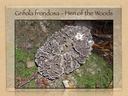
Terms: Sabropic, Parasitic and Mycorrhizal. Common Names vs Scientific Names. Labels and what they mean: Edible, Poisonous or Toxic (or Deadly), and Not Recommended. The last category is the most variable, because a mushroom that is not considered palatable in one culture may be enjoyed in another for its taste and/or texture or culturally accepted medicinal benefits. Another point to keep in mind is that even with highly prized choice edibles, like chanterelles or Grifola frondosa, individuals may not be able to tolerate them. There are also some people who can eat the mushrooms on their won, but have a reaction when consuming them with alcohol. This is not a comprehensive survey of all the edible and all the poisonous mushrooms you may encounter, but rather a introductory sampling of some of the more common edible fungi and their toxic look-a-likes. It is important to keep a proper perspective on the subject of toxic fungi. Only about 50 of the roughly 2000 that are most frequently included in field guides are listed as poisonous. Of these, far fewer still are considered fatally toxic. Rather than spend too much time worrying about whether or not the mushrooms you see are poisonous or edible, learn to identify the 50 or so toxic mushrooms and the 100-200 that are considered choice or at least worth eating. Then expand your interests to the majority of mushrooms which deserve to be appreciated for things other than there edibility: such as the role they play in their habitat. 001-001

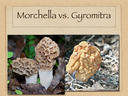
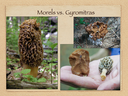
Ascomycetes. Both come out about same time in spring and often appear in same area. Several species of morels still to be sorted out: M. elata (European) (5 spp) & first to appear), M. semilibera, M. esculenta Morels are pitted and have hollow stipes. The cap is fused to the stipe. Gyromitra esculenta (Eur.), gigas (Eur.) or brunnea. Unlike morels, they are not completely hollow. They may exhibit a cotton mycelium and more stipe material. They have reddish brown, yellow, brown or brown lobed caps. Morels are found in apple orchards, and under ash and tulip poplar trees. Both morels and gyromitras may be both saprobic and mycorrhizal at various times in their life cycle. Cooking tip: Dry morels for future use. Rehydrate and cook them in cream. In Europe G. esculenta is considered edible. Yet 2 to 4% of fatalities are associated with eating them. They contain gyromitrin, which metabolizes to rocket fuel in the body. (Monomethylhydrazine) that destroys red blood cells. Period between ingestion and symptoms of vomiting, diarrhea, weakness, and headache is between 6-12 hours. Treatment is with Vit. B6. In the worst cases, patients become jaundiced, suffer convulsions, coma and death. Poisonous raw. Parboiling (2x) evaporates the active ingredient. But inhalation of fumes can be lethal. In the U.S. gyromitras may have variable amounts of gyromitrin. In the east seem to have more gyromitrin than those in the west, where they are eaten by some. It is recommended that we not eat them as in any case they are carcinogenic to at least mice. Morels and lead/arsenic poisoning from morels collected at apple orchards .013-001